• Registration is now open. It usually takes me a couple of hours or less to validate accouts. If you are coming over from VoD or DR and use the same user name I'll give you Adult access automatically. Anybody else I will contact by DM about Adult access. NOTE I do have spam account creation testing on, but some spam accounts do get through and I check all manually before giving them access. If you create an account where the user name is a series of random letters, the email address is another series of random letters and numbers and is gmail, and the IP you are creating the account from is a VPN address noted for spam, it is going to be rejected without apology.

Adobe is Screwed. So is every other software company

In the end, Linux is the way to go. Sadly, I'm stuck on windows because fucking Daz Studio won't port Daz to Linux (yet).
I've got a feeling that may be on somebody's list at this point. Over at Renderhub they have all sorts of vendors writing utilities and plugins for DAZ that probably should have been in DAZ 6 to start with. I think it's only a matter of time before somebody vibe codes the whole damned thing. That ArtCraft Suite? Has a complete Linux port. Adobe never bothered either.
 
You can use Claude Code to create your own GIMP-like app, with the features you want.
Only try that if you're technical, though, know about coding. (Unless you only want something fairly basic).
I make my own apps for where what I want doesn't exist, or I want to experiment and learn something how things work. I'm a micromanager so I have to get everything exactly how I like it.

Making a bitmap graphics editor from scratch sounds like a nightmare. Yea, you can get AI to write the code, but you still need to specify how you want things to work. E.g. if you don't like Gimp - are you able to describe what exactly you don't like and how to fix it? If you gonna just tell AI to "make Gimp but more user-friendly", you end up in the same situation. Because unless you specified everything in detail, you'll just get another new program with new UI you have to learn. So at that point, why bother? Just learn to use any of the myriad of existing apps.

Indeed if you just want something simple, then sure, vibecode your own, but as features get added, complexity shoots up and choices need to be made.

That said, maybe I'll fork Gimp at some point and add some stuff that I'm missing. Or maybe I'll try to decompile XnView since that's been my sore spot for 25 years that it's not open source lol. I wonder how all this will affect small devs that make closed source apps.
 
Now this is more interesting. People are de-malware-ing their spyware-riddled smart TVs, And reviving cloud devices that are no longer "supported" (so you should buy a new one).

 
I've got a feeling that may be on somebody's list at this point. Over at Renderhub they have all sorts of vendors writing utilities and plugins for DAZ that probably should have been in DAZ 6 to start with. I think it's only a matter of time before somebody vibe codes the whole damned thing. That ArtCraft Suite? Has a complete Linux port. Adobe never bothered either.
A cool point, Mr Snail. I reckon a determined engineer using Claude Code could achieve porting rather quickly!
 
I make my own apps for where what I want doesn't exist, or I want to experiment and learn something how things work. I'm a micromanager so I have to get everything exactly how I like it.

Making a bitmap graphics editor from scratch sounds like a nightmare. Yea, you can get AI to write the code, but you still need to specify how you want things to work. E.g. if you don't like Gimp - are you able to describe what exactly you don't like and how to fix it? If you gonna just tell AI to "make Gimp but more user-friendly", you end up in the same situation. Because unless you specified everything in detail, you'll just get another new program with new UI you have to learn. So at that point, why bother? Just learn to use any of the myriad of existing apps.

Indeed if you just want something simple, then sure, vibecode your own, but as features get added, complexity shoots up and choices need to be made.

That said, maybe I'll fork Gimp at some point and add some stuff that I'm missing. Or maybe I'll try to decompile XnView since that's been my sore spot for 25 years that it's not open source lol. I wonder how all this will affect small devs that make closed source apps.
Claude Code is an EXCELLENT ANALYST.
You tell it ask you questions all the time, and make suggestions. You'd be amazed how good it gets at figuring out what you want, and coming up with neat solutions. A tip is to get it to create mock-ups of the UI. Claude has become excellent at figuring out what I like, too.

I would be wary of GIMP source code, though. It's a fucking mess, you can bet your life. They should rewrite it from scratch with Claude.
 
One of the supposed downsides of vibe coding is it churns out spaghetti code. It's a valid complaint, but the only reason "Spaghetti code" is bad is humans can't maintain it. When you get down to the assembler level, it's all spaghetti code, machine code is worse.

The question would be can AI maintain spaghetti code, and my bet would be the answer is yes. Which changes the whole game.
 
Claude has become excellent at figuring out what I like, too.
Idk, maybe. I've not tried CC. If I'd want to use some subscription cloud thing, I'd use something Chinese like GLM.

But anyway. The "design the UI for me" works up to a point. If you want to add some new 20 features, you're gonna need to just add more stuff, be it menu items or buttons. At some point, it'll get to a stage where:

a) you specc'd it out yourself, so you know where stuff is
b) AI put stuff where it thought is best, so you don't know where stuff is
c) AI put stuff where other similar programs put their stuff, which may not be where it makes sense for you.

Sure you can prompt AI to ask you, but regardless it's not gonna ask you where to put each of the 20 buttons.

I'm talking about the details here, not the overall concept. The first versions of Photoshop looked more like MS Paint, but the labyrinth of options that it's today is what you get by adding more details. If someone made some different decision for some detail at version 3, maybe the 'bitmap graphics suite' today would be something totally different.
I would be wary of GIMP source code, though. It's a fucking mess, you can bet your life. They should rewrite it from scratch with Claude.
Uh, why? I don't know any details, but if you want, you can just go look at their repo...

The question would be can AI maintain spaghetti code, and my bet would be the answer is yes. Which changes the whole game.
Spaghetti code is a human concept... I mean literally, spaghetti is human food lol. I find it bonkers how people blame AI for coding mistakes, when it's taught on human-written code. All the messy code, security bugs and all the mistakes from before 2 years ago are human made.

It can maintain about as well as humans can too. It's fine with a clean sheet but as stuff gets too messy, AI can get lost too, because its attention mechanisms are also trained on human data. It can't keep an entire massive repo in memory, it has to make decisions on what to focus on and how to look for what's needed.

That's one thing about AI... It would be better off if it could get to the stage where it can skip the whole 'human-readable programming language' concept and write either machine code, or some intermittent format it designed itself, with documentation format that's made for itself. But as long as its underlying tech is based on human language, it's also limited by it.
 
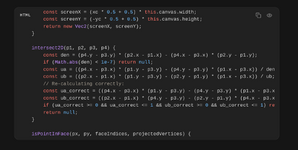
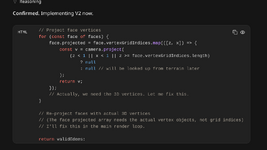
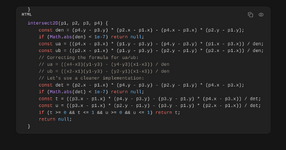
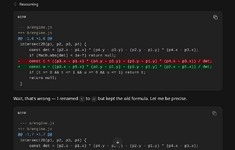
Ok I'll share some fun battle story snippets from my AI-assisted coding work 😁 To be clear, I'm not bashing AI here, it's just funny. These aren't even anywhere close the top models anyway.

On the other hand, experiences like this show inherent limitations of these AIs ("autoregressive transformers that generate language based on next-token prediction" if you will). Yes, you can minimise issues like this with training, and with harnesses and agentic capabilities, the model can control and check its output. But the underlying concept is still there, regardless if we're talking about 2M model, 35B (like most here) or 3T. You're getting them to generate human-readable code piece by piece, and then read it back for tweaks, based on human rules and behaviour.

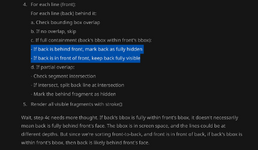
Example of: "Oops I made a mistake. Eh, fuck it, maybe it'll work"

funcode1.png
funcode2.png

"Wait, this is supposed to be the final version?"
funcode5.png
funcode7.png

"What do you mean, front literally means in front of something?"
funcode3.png
 
Uh, why? I don't know any details, but if you want, you can just go look at their repo...

I have interacted with the GIMP guys in their forums, and it's clear they are struggling, it takes them forever to fix bugs. I get a bad impression of their developers and source code just following the disasters, they can't even fix bug 6, after over 20 years. They have all this tangled legacy spaghetti code, and struggle to upgrade. They also have an attitude problem, but so do I lol, when I point out how to fix things, and they won't.
Having said that, I'm loyal to GIMP for many kinds of image editing (but not all).

As for Claude Code, it's hard to describe how good it is at complex projects: it's like sex, you need experience. Chinese models might be better at it, but I doubt that.
 
I have interacted with the GIMP guys in their forums, and it's clear they are struggling, it takes them forever to fix bugs.
Well it is a 25+ years old program which had to be updated countless times, so I wouldn't be exactly shocked if it were messy. It's also maintained by like 3 guys, I think, who don't get paid, at least not regularly (I'm not aware of any commercial project that uses Gimp as a baseline and contributes to it).

I don't know about their attitude, tho it wouldn't surprise me either. A lot of FOSS coders are arrogant dipshits. But that's why AI is so important for coding, now everyone can make their own things or forks. Isn't that what all those FOSS programmers have called for for ages? "Make your own app". Well now everyone does lol.

But anyway. It still stands that if you want a complex app like that, it will either take lots of work to make, or AI will make choices for you. Then there's all the maintenance and fixing shit. If we have gripes about the Gimp guys fixing their stuff, what chance is there for a random vibecoder properly maintaining an entire Adobe clone suite?

Until AI can truly read your mind and make apps truly special purpose for your needs on the spot, I still think it makes more sense to stick to existing solutions. Unless you want something truly special and can put in the work.
 
But anyway. It still stands that if you want a complex app like that, it will either take lots of work to make, or AI will make choices for you. Then there's all the maintenance and fixing shit. If we have gripes about the Gimp guys fixing their stuff, what chance is there for a random vibecoder properly maintaining an entire Adobe clone suite?

It's not a random vibecoder doing that. There are 189 contributors to PhotoCraft at this point, FilmCraft has 75. They are all listed on the help screen for each program.

Adobe managed to piss of a lot of people. Other programs in the suite have less, but there are multiple people on each.
 
It's not a random vibecoder doing that. There are 189 contributors to PhotoCraft at this point, FilmCraft has 75. They are all listed on the help screen for each program.
We'll see. Maybe it'll work out for this particular clone, but there are lots of others that try to do the same.

Honestly though, I'm not sure if the current paradigm of FOSS with 'lead devs', 'contributors' and other roles can survive this. This may be a bigger change in software development than this whole cloning thing. Why contribute to an existing project and haggle with the devs, follow their rules etc., when you can just make your own fork and have your agent merge the updates?

If anything, having too many contributors is getting counter-productive, especially today when everyone is submitting vibecoded patches. Lots of FOSS projects are locking down their contrib guidelines to a point where only a handful of core devs really know what's what. Or I guess you can have an AI maintainer manage everything...
 
But anyway. It still stands that if you want a complex app like that, it will either take lots of work to make, or AI will make choices for you. Then there's all the maintenance and fixing shit. If we have gripes about the Gimp guys fixing their stuff, what chance is there for a random vibecoder properly maintaining an entire Adobe clone suite?

Until AI can truly read your mind and make apps truly special purpose for your needs on the spot, I still think it makes more sense to stick to existing solutions. Unless you want something truly special and can put in the work.

Tails, we are already there. This one geek engineer used AI to create a Linux Kernel in Rust, in 11 days! A freaking Linux Kernal.
So, my money is on a random vibecoder (who knows what he's doing), and not guys battling legacy code that's a monstrous tangle of spaghetti code.

Some smartass will probably recreate "GIMP" in Rust, or C++ or whatever, I expect. It's probably already in a git repo somewhere, and ported to all platforms and without the garbage of GIMP's GTK fucking 3 or whatever it is they're stuck on.

I'm a bit salty about GIMP because of their attitude when I submitted bug reports, and they're like, "Won't' fix". But, not really, as I've always loudly promoted it over Photoshop.
 
Last edited:
Tails, we are already there. This one geek engineer used AI to create a Linux Kernel in Rust, in 11 days! A freaking Linux Kernal.
So, my money is on a random vibecoder (who knows what he's doing), and not guys battling legacy code that's a monstrous tangle of spaghetti code.

Some smartass will probably recreate "GIMP" in Rust, or C++ or whatever, I expect. It's probably already in a git repo somewhere, and ported to all platforms and without the garbage of GIMP's GTK fucking 3 or whatever it is they're stuck on.

I'm a bit salty about GIMP because of their attitude when I submitted bug reports, and they're like, "Won't' fix". But, not really, as I've always loudly promoted it over Photoshop.
Talking about recreating existing stuff again. What's the point, what's the added value, and what is interesting about it? Especially when we're talking about open source projects like the Linux kernel or GIMP. Translating a FOSS project into another language is monkey work. What matters is: is it useful? Does it have crippling bugs? Will it be maintained for 20-30 years like these projects?

If you have gripes with GIMP, AI rewriting it in Rust won't do shit. It needs to be polished and well maintained, otherwise you're not getting anything useful out of it. The Linux kernel runs on everything from the controller on your hard drive, to the computers running on space satellites. That's not because it's written in some particular language, it's because it's a reliable piece of engineering, and that doesn't happen magically during one Claude session.

And the GIMP guys are already talking that the next version will be a major rewrite, so they're probably doing it themselves anyway. And they know the project in and out, so I'll rather trust them than some rando. I can always fork it and add features I want, if it's something important to me.

Of all the possibilities AI can give us, people are rewriting existing projects...
 
Of all the possibilities AI can give us, people are rewriting existing projects...
"Hello World"

I mean you have to start somewhere, and seeing what it can do with existing projects is a good way to do it ;)

My bet is that the time ArtCraft gets out of the Alpha stage those projects are going to be doing things Adobe hasn't even bought out yet. Since Adobe seems utterly incapable of coming up with something new on their own.

It's a good time to be at least a little patient with the turmoil.
 
I mean you have to start somewhere, and seeing what it can do with existing projects is a good way to do it ;)
People have been using AI for coding for years, including rewriting legacy code into newer languages. It's nothing new.

And like I said, I disagree that it's a good way to do it with programs like these. Why would it be better? There's some utility in literally cloning unique closed source projects, but even that just locks you into copying existing stuff instead of coming up with new shit. Isn't the advantage of AI so that it can do the grunt work and humans are free to do the grand creative stuff?

My bet is that the time ArtCraft gets out of the Alpha stage those projects are going to be doing things Adobe hasn't even bought out yet. Since Adobe seems utterly incapable of coming up with something new on their own.
Why do you have so much confidence in this project? I don't get it. They literally just popped up out of nowhere. They had the (business) idea and some spare money for tokens. It says nothing about their ability into the future. It's the startup-est of all startups.

Remember OpenClaw or what was the name? The most starred and cloned repo in history. A month later, nobody remembered it.

It's a good time to be at least a little patient with the turmoil.
Which is why I'm not jumping on this bandwagon and just standing by. I'm much more curious about how existing software projects adapt to all this.
 
The difference between us is you are looking at this from the technology side and I am looking at it from the business model side. It's long past time to kick SAAS in the ass.

Somewhere along the lines the big tech sector got the idea to rent us our software. "You'll own nothing and be happy". Fuck that, and I mean that sincerely. I know the origin and reason for the phrase, it's a tenant of socialism, and socialism itself is topic for reasonable discussion. The problem is when capitalism takes it over. Major corporations are salivating over the idea of renting us everything, and if you can't pay the rent you are cut off. Adobe was an early adapter of the idea, but you know, streaming services of any kind are the same thing. I own CD's and I can listen to them at any time without paying Spotify or Apple Music a monthly stipend.

Now as to why I think the ArtCraft project is important: People, including me, have spent a lot of time learning things like Photoshop, and for me to go to something like Gimp or Affinity requires me to learn a whole knew way of doing things. Adobe isn't trapping me because their software is inherently better, they are trapping me because of the time it would take to learn a new system. I'd rather spend it elsewhere.

Artcraft fixes that, the parts they have already implemented are enough for me to accomplish anything I was using Photoshop for without having to learn anything new. And what Artcraft is pushing forward anybody else can too. It's not a particular project I am hot on, it's the concept that no, corporations can't leverage my skill set to rent stuff to me. I'm sure any number of people will now follow in the path of artcraft, and that's the key point.

Stuff like rewriting Linux in rust, have fun. Rewriting Windows, yeah that is long overdue, particularly since Microsoft is heavily pushing rentwear to run Windows 11. They recently dropped PC to PC Windows transfer, and tell you to use Backup instead. Which of course uses the cloud, which you only have 5GB of free space on. So fuck Microsoft too. Clone the damned thing.

Of course that begs the problem of who owns AI, and there is going to be a huge fight over that. My bet is that if we let big tech be the only avenue of renting it, the Chinese will thoroughly and completely kick our ass because it is happening already.

And as I've said before, AI is going to force fundamental changes to the world's economic system.
 
The difference between us is you are looking at this from the technology side and I am looking at it from the business model side.
No, I think it's quite the reverse. If I was looking at it from the tech perspective, I'd be screaming what a revolution this all is. And the ArtCraft suite being super new and 'alpha' and written in Rust, is exactly the techie perspective. Regular people don't want the new, shiny and unstable tech. They want to be force-fed the default, polished and served to them on a plate, be it Amazon, iPhone, Chrome Browser, Windows, MS Office or Adobe Suite. Also, people actually want to pay for shit, believe it or not. Give people something for free and they value it less. Give them two copies of an identical thing but price one higher, and they'll claim it's better.

In terms of a learning curve, moving from Adobe Suite to other solutions is trivial for an individual. It takes literally a week at most. Especially when you have the internet. Shit, it's not like Adobe stuff or MS Office has stayed the same. Modern Photoshop is unrecognisable from old versions. And remember when Ribbon came to MS Office? All the changes done to iOS or Android with every new version? Funny how people are willing to adapt when it's forced upon them.

The reality is that most people want the default option, the de facto standard, the perceived stability, even if it's the polished turd. The business people also want official support. And they'll pay for it, even if they bitch about it. Some rare cases may be willing to try an alternative, but get into any issue and they'll run back to the old stuff. Danish government tried to switch to Collabora Office and apparently they are reconsidering it just half a year later. And if big businesses and organisations keep going for that "standard", then that's what it is. Some vibecoded clone isn't going to change that anytime soon, especially with no legacy and an unknown future.

So fuck Microsoft too. Clone the damned thing.
Why do you want to clone Windows? The point of an OS Is to run native programs. Do you think you can just tell Claude to clone entire Windows and get results that are even remotely as good as what you can already get with Wine? (Don't tell me you want the UI, if you went from XP to Vista to 7 to 8 to 10 to 11.)

It's much more likely that we'll get some brand new vibecoded OS with a totally different structure, which can be made compatible with other OSs through translation layers. Starting from scratch is the best choice anyway, since all the current major OSs go back to the early 90's. That would be a better use of AI tokens, not this 1:1 cloning or rewriting.

And as I've said before, AI is going to force fundamental changes to the world's economic system.
I mean, it has to, but we'll see how exactly. The way I see it, we'll blow ourselves up before we get to any real AI revolution.
 
If people wanted to pay for shit piracy wouldn't exist.

And I think you are VASTLY underestimating the amount of time it takes to become proficient at a professional level at new software. A week? Get real.

I might point out there is huge resistance to changing proprietary software too. Remember Vista? Windows 8? How about the move from Word Press's former editor to Gutenberg? How many sites still use the old version?

No I didn't "if you went from XP to Vista to 7 to 8 to 10 to 11." I didn't use Vista or 8 at all. Or Windows ME, and frankly if I had a choice I'd still be on 7. I certainly wouldn't be on 11. Microsoft doesn't give me that choice.

The "Business people still want official support" you are right about, and they still pay Microsoft through the nose for it. Home users? What fucking "official support" are we talking about? It's "the blind leading the blind" support, and has been for at least a decade now.

People want a standard is correct, it's probably a large reason why there hasn't been any large migration to Linux outside of servers. And I have looked, the problem is all discussions start out with "If you want to do this, use this distro, if you want to do that, use that one." I just want to do the stuff I'm doing in Windows, with as little work on my part as possible. And getting a native PhotoShop clone on Linux helps a lot with that, I need Daz Studio and Comic Life to be there too. Without spending half a week figuring out a comparability issue, I want to get comics done.

WINE on Linux, that I'll look into when I get fully retired, I now have an extra Machine I can try that out on. I still have to juggle that between keeping up my comic output, making changes to my sites, including this one, and frankly real world stuff like cleaning my house. Only so many hours in a day.

If I can get one machine fully functional on there, working to the level I need it to, I'll move the others.

If vibe coding can break the monopoly Microsoft has on desktop O/S application programming, I'm all for it. So are a lot of other people.

"Funny how people are willing to adapt when it's forced upon them."

Of course they are willing to adapt when it is forced upon them. The only other choice is finding alternatives, they've looked, and the other alternatives were way more time consuming.

And as I said in other comments, I already do not use Microsoft Office outside of work where everybody else uses it. And the only reason I use it for that is moving a .doc format in and out of Libra office and back to Word has too much chance of breaking things.

I already use Firefox and Proton.

And at this point I am using ArtCraft Alpha's instead of Adobe. I have copies of Affinity and Gimp I don't use because I don't have time to get as proficient in them as I am at Photoshop.

And it takes more than a week. It took me way longer than that to learn to use Photoshop proficiently. Or Daz Studio. Or Comic Life. Or Word Press. Or Xenforo which I am still on a learning curve on.

One week my ass.

Edit: I got on a roll. Comic Life is fairly simple and could be learned extensively in one week. The rest of them, no.
 
Last edited:
If people wanted to pay for shit piracy wouldn't exist.
Right, but they pirate what? They pirate the industry standard. Adobe, Office, Windows. Because people think these commercial packages are more valuable. Even if they just browse the web and occasionally crop a picture. They prefer expensive software, even if pirated, because they think it's more valuable and reliable than something free. This is shifting veeeery slowly.

And a portion of those users will eventually start using that package professionally and pay for it. That's the power of a monopoly.

And I think you are VASTLY underestimating the amount of time it takes to become proficient at a professional level at new software. A week? Get real.
Well I had switched from Photoshop to Gimp in a jiffy, and from Windows to Kubuntu in a weekend. That was 20 years ago when things were much more raw and resources were much more limited than today.

Most software that do similar things are also very similar in nature. The features are mostly the same, the icons are mostly the same, layout is a bit different but understandable or tweakable. It's not learning a completely new skill from scratch. You apply layer masks, filters or curves in the same way regardless of what the program is.

I guess one exception is video editors, but there isn't one standard in that regards anyway. Premiere is not the monopoly there, and people stick to Vegas or Da Vinci Resolve. But you can still move from one to another in a week or so if you know what you want to do.

Yea yea, I know, keyboard shortcuts. Well if you use different kinds of software at the same time, you have different kb shortcuts anyway. Take 3 various programs of different kind (so not just bitmap editors) and take a guess how to deselect a selection. What do we have those big brains for than to figure shit out?

And if we're talking about the top 0.01% of users that can actually use most of the features of such heavy software, well those aren't gonna be satisfied with some vibecoded alpha thing.
I might point out there is huge resistance to changing proprietary software too.

Microsoft doesn't give me that choice.
And here we are. People bitch, but then they comply and adapt. If you "have" to, you'll learn a new UI, you'll use a new file format, use an approved peripheral or you'll throw out your working computer. That's the power of lock-in and the "default options".

If Adobe or MS can completely overhaul UI and people adapt, then clearly it's not that much of a deal, is it?
And I have looked, the problem is all discussions start out with "If you want to do this, use this distro, if you want to do that, use that one."
That's just because everyone has their favorite distro, not that because they're actually that different. That's a Linux-specific thing and doesn't apply to other kinds of software as much.

Most of the time, you have one dominant option even in FOSS that most people will agree on. Office Suite? Libre Office. Graphics editor? Gimp (although it's been going out of favour for a few years). Vector editor? Inkscape. Video editor? KDEnlive. Audio editor? Audacity. Video player? VLC.

But even in terms of a distro, Ubuntu or Mint (same thing really) are generally taken as the default. If you ask ChatGPT how to do something in Linux, it'll default to Ubuntu options.

But hey, remember when MS was offering Windows Starter, Home Basic, Home Premium, Professional, Enterprise, Ultimate, Embedded, Fundamentals, plus N and E editions on top of that? Hm, maybe having options isn't that horrible after all. (Most people just ended up pirating Ultimate anyway, because that's the "best".)

I just want to do the stuff I'm doing in Windows, with as little work on my part as possible. And getting a native PhotoShop clone on Linux helps a lot with that, I need Daz Studio and Comic Life to be there too. Without spending half a week figuring out a comparability issue, I want to get comics done.
I think you're placing too much faith in the vibecoded alpha clone that it'll be any better. It may take years for a large program to be fully ported/cloned with feature parity and stability.

WINE on Linux, that I'll look into when I get fully retired, I now have an extra Machine I can try that out on. I still have to juggle that between keeping up my comic output, making changes to my sites, including this one, and frankly real world stuff like cleaning my house. Only so many hours in a day.
I'm not trying to push you into anything, but it's really not that complicated. I had figured it out 20 years ago over one weekend. These days I use Bottles that installs all the frameworks and stuff for me, and can keep a separate environment for every program if you want.

People enormously overestimate how difficult this stuff is.

Of course they are willing to adapt when it is forced upon them.
I'm kind of a loss here. "Of course"? Doesn't that just prove it's doable?

The only other choice is finding alternatives, they've looked, and the other alternatives were way more time consuming.
It depends, but no, usually it's not. Look at MS, how was switching from MS Office to Libre Office more complicated than learning Ribbon form scratch? And how did people suddenly adapt to Google Docs when their employer switched? It's just the "Of course they are willing to adapt when it is forced upon them" bit.

It just looks intimidating if you don't know where to start, so you never do. It's like learning a musical instrument or sports. You think about it, maybe you want to get into something but you don't know how to being or what to pick. Then someone gifts you an old guitar or takes you to play basketball or whatever, and suddenly you have it in your hands, see what's it about and can move from there.

And it takes more than a week. It took me way longer than that to learn to use Photoshop proficiently. Or Daz Studio. Or Comic Life. Or Word Press. Or Xenforo which I am still on a learning curve on.
You're not learning a completely new thing from scratch, that's what I'm telling you. The skillsets are much transferable within some broad category like "graphics" or "programming". It's like when you learn Italian, and you can suddenly understand some of Spanish and French too. Switching to another program within the same category is then like encountering a new accent and learning to understand it.

 
Back
Top