

TailsWin
Well-known member
The Houmo M50 chip has been cooking for a while so I'm not sure if it's only now out, or it just now got packaged as a product. Either way, I presume the RAM is Chinese too, since they do make DDR5.
Overall it's close to what I expected for a first gen product: simple NPU and RAM, on a M.2 board (SSD size), 15W power consumption compared to... Well, hundreds of W for a GPU.
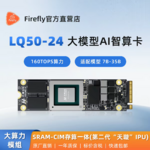
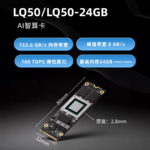
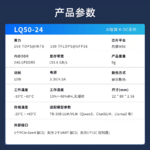
Reddit is making fun of it for having slow RAM. I guess that's valid, but it's clear that it's 1) not a very optimized product (I still expect someone will make good of the idea of just bolting tensor cores directly onto RAM chips rather than have a separate chip, as this will always be slow), 2) it's not actually competition for GPUs, more like for edge devices, DIY or robots, for which this could be great. They benchmark 8B and A3B models at 25 tk/s which isn't much if you want to refactor your leaked Windows Vista codebase, but it should be able to run a couple 1B-3B models in parallel doing all kinds of things, like video recognition with transcribing and simultaneous search or whatever.
Cost is apparently about $1200 for 24GB, which sounds expensive, but I dunno. Maybe that's just prices for outsiders, or first batch cost, or they see it as specialised hardware. So I guess in that context, it makes sense.
We've been here before, with so many other high tech products. Once the Chinese start pushing, within 5 years we should see 1/10 of the cost and 10x the power, unless something blows up.
Obv these guys aren't the only ones with their own hardware, tons of other companies have their chips, including Xiaomi. But this is something you can actually buy and plug into a PC, at least in theory.
BTW M.2 AI cards have also existed for a while, but nothing actually serious for real use, more like funny toys for research, simple robotics and such.
Overall it's close to what I expected for a first gen product: simple NPU and RAM, on a M.2 board (SSD size), 15W power consumption compared to... Well, hundreds of W for a GPU.
Reddit is making fun of it for having slow RAM. I guess that's valid, but it's clear that it's 1) not a very optimized product (I still expect someone will make good of the idea of just bolting tensor cores directly onto RAM chips rather than have a separate chip, as this will always be slow), 2) it's not actually competition for GPUs, more like for edge devices, DIY or robots, for which this could be great. They benchmark 8B and A3B models at 25 tk/s which isn't much if you want to refactor your leaked Windows Vista codebase, but it should be able to run a couple 1B-3B models in parallel doing all kinds of things, like video recognition with transcribing and simultaneous search or whatever.
Cost is apparently about $1200 for 24GB, which sounds expensive, but I dunno. Maybe that's just prices for outsiders, or first batch cost, or they see it as specialised hardware. So I guess in that context, it makes sense.
We've been here before, with so many other high tech products. Once the Chinese start pushing, within 5 years we should see 1/10 of the cost and 10x the power, unless something blows up.
Obv these guys aren't the only ones with their own hardware, tons of other companies have their chips, including Xiaomi. But this is something you can actually buy and plug into a PC, at least in theory.
BTW M.2 AI cards have also existed for a while, but nothing actually serious for real use, more like funny toys for research, simple robotics and such.
Last edited:
